


Lake Manyara National Park
Lake Manyara National Park is a compact jewel of the Northern Circuit — a lush, varied wilderness where groundwater forests give way to open grasslands, acacia woodlands, and the shimmering alkaline waters of Lake Manyara that can stretch across two-thirds of the park during the wet season.
Destination Guide
About Lake Manyara National Park
Lake Manyara National Park is a compact jewel of the Northern Circuit — a lush, varied wilderness where groundwater forests give way to open grasslands, acacia woodlands, and the shimmering alkaline waters of Lake Manyara that can stretch across two-thirds of the park during the wet season. Spanning just 330 square kilometres, this park punches far above its weight in biodiversity and scenic beauty. Ernest Hemingway once described it as "the loveliest lake in Africa," and when thousands of lesser and greater flamingos turn the shoreline into a sea of pink against the towering backdrop of the Great Rift Valley escarpment, you will understand exactly what he meant.
Lake Manyara is perhaps most famous for its tree-climbing lions — a rare behavioural phenomenon where prides drape themselves across the branches of mahogany and fig trees, sometimes several metres off the ground. Scientists debate why they do this (possibly to escape tsetse flies or catch cooling breezes), but watching a lion sprawled lazily on a branch is one of safari's most unique sightings. Beyond the lions, the park shelters large troops of olive baboons at the entrance gate, hippo pools, elephant herds moving through the groundwater forest, and an astonishing 400+ bird species concentrated in this small area. The alkaline lake itself attracts enormous flocks of flamingos, pelicans, and storks. With the dramatic Rift Valley wall rising 600 metres behind you, every game drive feels like driving through a landscape painting. A C.A.T.S Safari to Lake Manyara is the perfect introduction to Tanzania's extraordinary wildlife.
Why Visit Lake Manyara National Park?
Lake Manyara offers an incredibly diverse safari experience in a compact, easily accessible package. Within a few hours' drive, you transition from dense tropical forest to open grassland, acacia woodland, and the vast alkaline lake — each habitat hosting different wildlife. The tree-climbing lions are a genuine bucket-list sighting available in very few places on Earth, and the park's baboon troops are among the most studied and easily observed in East Africa. For families, Lake Manyara's small size means short, action-packed game drives where children see a wide variety of animals and birds without long stretches between sightings. The treetop walkway (canopy walk) through the forest adds a thrilling adventure element, and the hot springs at Maji Moto offer a unique stop. At just 126 km from Arusha, Lake Manyara is typically the first or last stop on Northern Circuit itineraries, combining perfectly with Tarangire and Ngorongoro. Birdwatchers will be in paradise — the density of species per square kilometre is among the highest in Africa.
🦁 Wildlife Guide
Animals of Lake Manyara National Park
Tree-Climbing Lion
ModerateLake Manyara's lions are famous for their unusual habit of climbing and resting in trees. They are most commonly spotted in mahogany and fig trees along the forest edge.
African Elephant
HighHerds of elephants are regularly seen in the groundwater forest and acacia woodland, often crossing the road between forest and lake shore.
Olive Baboon
Very HighEnormous troops of olive baboons inhabit the park entrance area. Their complex social behaviour provides fascinating viewing.
Blue Monkey
HighThe dense groundwater forest near the park entrance is home to troops of blue monkeys, often seen leaping between branches overhead.
Hippo
Very HighThe hippo pools along the lake shore and river offer reliable sightings of these massive semi-aquatic mammals.
Lesser Flamingo
SeasonalThousands of lesser flamingos gather on the alkaline lake, creating spectacular pink concentrations visible from the shoreline drives.
Giraffe
Very HighMasai giraffes browse the acacia woodlands and are commonly seen in graceful groups against the Rift Valley backdrop.
African Buffalo
HighHerds of buffalo are common in the open grasslands and woodland edges, often accompanied by oxpeckers.
Leopard
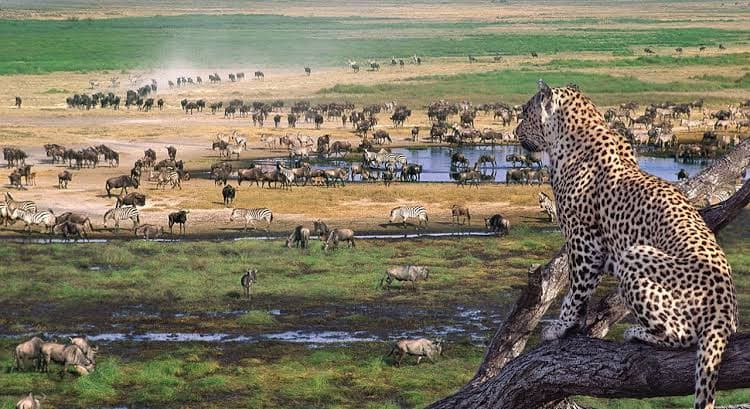
RareLeopards inhabit the forest and riverine areas but are elusive. Early morning and late afternoon drives offer the best chances.
Great White Pelican
SeasonalLarge flocks of pelicans fish on the lake, often in coordinated groups that are spectacular to watch and photograph.
🎯 Activities & Experiences
Things To Do at Lake Manyara National Park
Tree-Climbing Lion Search
Scour the mahogany and fig trees along the southern forest edge for Lake Manyara's famous tree-climbing lions — a rare wildlife behaviour found in very few places on Earth.
Treetop Canopy Walk
Walk along an elevated boardwalk through the forest canopy, spotting blue monkeys, hornbills, and silvery-cheeked hornbills at eye level.
Mto wa Mbu Village Tour
Explore one of Tanzania's most diverse towns — visit banana plantations, taste banana beer, browse the colourful market, and meet people from over 120 ethnic groups.
Flamingo Photography
Capture the ethereal beauty of thousands of flamingos on the alkaline lake with the Rift Valley escarpment rising dramatically behind them.
Mountain Biking
Explore the Rift Valley countryside on two wheels, pedalling through banana groves, rice paddies, and local villages with stunning escarpment views.
Hot Springs at Maji Moto
Drive to the park's southern section to see natural hot springs where geothermally heated water bubbles to the surface — a fascinating geological feature.
📅 When To Visit
Best Time to Visit Lake Manyara National Park
Dry Season
ExcellentJuly – October
Best wildlife viewing with animals concentrated near the remaining water sources. Tree-climbing lions are more active and visible. Clear skies for photography.
Green Season (Flamingos)
GoodNovember – February
Flamingos arrive in huge numbers on the lake. Lush vegetation and migratory birds. Great for birding and photography with green landscapes.
Early Dry
GoodJune
Good transition period with excellent game viewing as the bush starts to thin. Fewer tourists and pleasant temperatures.
Long Rains
FairMarch – May
Heavier rains can make roads challenging and the lake may flood some driving routes. Lowest tourist numbers and best accommodation rates.
✈️ Getting There
How to Reach Lake Manyara National Park
Road from Arusha
Approximately 126 km (2 hours) from Arusha on a good tarmac road. Lake Manyara is the first stop on the Northern Circuit.
From Ngorongoro
About 50 km (1 hour) from the Ngorongoro Conservation Area gate, making it easy to combine both on the same day.
Scheduled Flight
Flights to Lake Manyara airstrip from Arusha with Coastal Aviation or Auric Air. Flight time approximately 30 minutes.
C.A.T.S Safari Transfer
All C.A.T.S packages include 4x4 Land Cruiser transfers from Arusha with experienced English-speaking driver-guides.
💰 Park Fees
Entry Fees for Lake Manyara National Park
| Category | Fee (per person/day) |
|---|
* All park fees are included in C.A.T.S safari packages. Fees shown for reference only and may change without notice.
❓ Frequently Asked Questions
Lake Manyara National Park FAQs
🦒 Explore Our Safaris
Safaris Featuring Lake Manyara National Park


Ready to Experience Lake Manyara National Park?
Let our expert team craft your perfect Tanzania safari. 15 years of experience. Unbeatable local knowledge. Your adventure starts here.