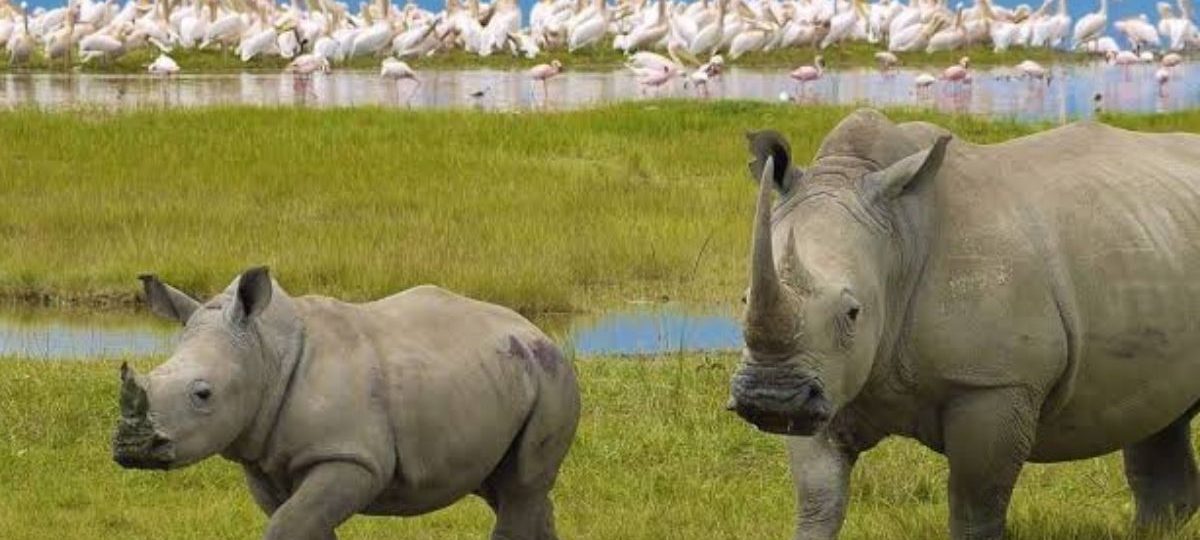
With its thick, armor-like skin, powerful build, and iconic horn, the rhinoceros is one of Africa’s most fascinating animals. Despite its formidable appearance, the rhino is naturally shy, elusive, and largely nocturnal, which makes sightings far from guaranteed on safari. Many visitors are surprised to learn that you can travel through excellent wildlife parks and still never encounter one.
The secret to seeing rhinos lies in choosing the right destinations—parks and conservancies where strong conservation programs have helped rhino populations recover and thrive. Kenya is a continental leader in rhino protection, offering some of the most reliable opportunities to observe both black and white rhinos in their natural habitat.
At Collective African Tours & Safaris (CATS), we take you to carefully selected reserves and sanctuaries where rhino sightings are frequent and conservation success stories come to life.
Nairobi National Park – The “Kifaru Ark”
Few wildlife experiences in the world are as extraordinary as spotting a rhino with a modern city skyline in the distance. Nairobi National Park, located just a short drive from the capital’s center, is a fully protected ecosystem that supports lions, giraffes, cheetahs—and one of Kenya’s most important rhino populations.
Often referred to as the “Kifaru Ark” (kifaru means rhinoceros in Kiswahili), the park is a stronghold for black rhinos. Through a highly successful breeding and protection program, rhino numbers here have grown so steadily that individuals are regularly relocated to help restock other parks across Kenya.
This makes Nairobi National Park one of the most reliable places in the country to encounter these rare animals.
Lake Nakuru National Park – A Rhino Conservation Success Story
Nestled in the Great Rift Valley, Lake Nakuru National Park is famous for its birdlife, big cats, and scenic landscapes—but it is also one of Africa’s most successful rhino sanctuaries.
Established in 1984 with just two rhinos, the park’s protected sanctuary has expanded into a safe haven for both black and white rhinos, with the population now exceeding 150 individuals. This remarkable growth stands in sharp contrast to the overall decline of rhinos elsewhere on the continent.
Here, rhinos roam freely among acacia woodlands and open grasslands, offering excellent visibility and frequent sightings.
Ol Pejeta Conservancy – Home of the Last Northern White Rhinos
Ol Pejeta Conservancy is one of Kenya’s most renowned wildlife conservation areas and one of the few places where visitors can see all of the Big Five. While its rhino population is modest compared to Lake Nakuru, Ol Pejeta holds an unparalleled distinction in global conservation history.
The conservancy is home to Najin and Fatu, the last two surviving northern white rhinos on Earth.
These two females live within a highly secured sanctuary, protected around the clock by armed rangers and advanced surveillance systems. A visit here is more than a wildlife sighting—it is a powerful reminder of both human impact and the urgent need for conservation.
Seeing Najin and Fatu is witnessing the final chapter of a species and the ongoing scientific efforts to preserve their genetic legacy.
Tsavo West National Park – Ngulia Rhino Sanctuary
One of Kenya’s largest and oldest protected areas, Tsavo West National Park offers rugged scenery and vast wilderness. Within it lies the Ngulia Rhino Sanctuary, a fenced and closely monitored area covering approximately 70 square kilometers (27 square miles).
This sanctuary protects over 80 black rhinos, with numbers continuing to rise thanks to intensive anti-poaching measures and managed breeding programs. The sanctuary’s success highlights how targeted conservation can reverse decades of decline.
Tsavo West also rewards visitors with diverse landscapes, from lava flows and springs to dense bush and open plains.
Why Rhino Conservation Matters
Just half a century ago, Africa’s rhino population numbered in the hundreds of thousands. Today, fewer than 20,000 rhinos remain across the continent, largely due to poaching driven by illegal wildlife trade.
The encouraging news is that tourism plays a vital role in their survival. Every safari visit supports:
- Anti-poaching patrols
- Community conservation initiatives
- Habitat restoration
- Scientific research and breeding programs
By choosing responsible safari operators, travelers directly contribute to the protection of these magnificent animals.
See Rhinos the Right Way
A rhino sighting is more than a highlight—it’s a privilege and a testament to conservation success. With expert guides, carefully chosen destinations, and ethical wildlife practices, Collective African Tours & Safaris (CATS) offers unforgettable opportunities to see rhinos while supporting their future.
Get in touch with us to plan a safari that brings you face to face with one of Africa’s most extraordinary and endangered creatures—the rhinoceros.